
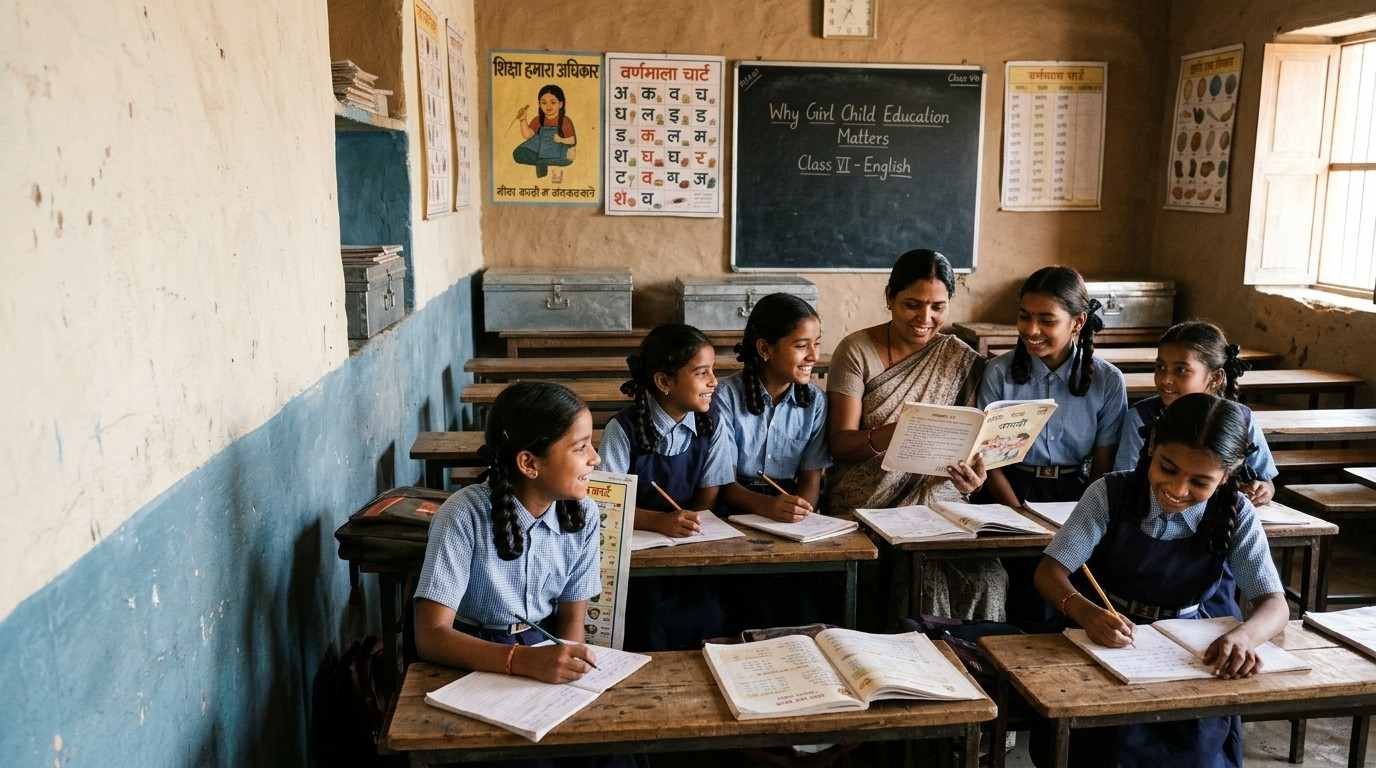
Why Girl Child Education Matters in Rural India?
 DGVS
Education is more than learning to read and write. It creates opportunities, builds confidence, and gives children the knowledge to shape their futures. For millions of girls growing up in rural India, access to quality education can make a meaningful difference in their lives.
Girl child education matters in rural India because it helps reduce poverty, promotes gender equality, improves health awareness, and creates opportunities for economic independence. When girls receive quality education, they are better equipped to make informed decisions, pursue careers, and contribute to their communities.
Despite progress in school enrolment, many rural girls continue to face financial, social, and infrastructural challenges that affect their education.
This is where a girl child education NGO can play an important role. By supporting access to schools, educational resources, mentorship, and community awareness, NGOs help girls overcome barriers and continue their learning journeys.
Why Is Girl Child Education Important in Rural India?
Girl child education is essential for building stronger families, healthier communities, and a more inclusive society. Educated girls are better positioned to pursue employment, understand their rights, participate in decision-making, and support future generations. In rural India, improving girls’ access to education also strengthens long-term social and economic development.
1. Breaking the Cycle of Poverty
Education equips girls with literacy, numeracy, communication, and practical skills that can improve their future employment prospects.
When rural girls complete secondary education and pursue higher studies or vocational training, they gain more opportunities to become financially independent.
Their earnings can contribute to household stability, improve living conditions, and help families invest in children’s education.
However, education alone does not guarantee employment. Access to safe workplaces, skills training, transport, and economic opportunities is equally important.
2. Promoting Gender Equality and Women’s Empowerment
In some rural communities, traditional gender expectations continue to influence educational opportunities.
Girls may be expected to prioritize household responsibilities, while boys receive greater encouragement to continue studying.
Education can challenge these inequalities by helping girls develop confidence, critical thinking, leadership abilities, and awareness of their rights.
Supporting girls’ empowerment through education also encourages families to recognize daughters as individuals with ambitions and potential.
3. Improving Health and Family Well-Being
Education helps girls understand nutrition, hygiene, reproductive health, and the importance of accessing healthcare.
It can also strengthen their ability to recognize misinformation and make informed decisions about personal and family well-being.
When combined with accessible healthcare services, education can contribute to healthier outcomes for women and children.
These benefits extend beyond individual students and support broader community development.
4. Reducing the Risk of Child Marriage
Girls who remain in school may have greater opportunities to delay marriage and pursue their personal goals.
According to UNICEF’s report on child marriage in India, approximately 23% of young women in India were married or in a union before turning 18, based on the data presented in its 2023 profile.
The report also highlights that girls from poorer and rural households face greater risks.
Education, community awareness, child protection systems, and enforcement of laws must work together to address child marriage.
UNICEF DATA+1
What Are the Major Challenges Facing Girls’ Education in Rural India?
Rural girls may face several interconnected barriers, including household poverty, long distances to secondary schools, inadequate sanitation, safety concerns, domestic responsibilities, and restrictive gender norms. These challenges can affect attendance, learning outcomes, and school completion, particularly during adolescence when educational and social pressures often increase.
1. Poverty and Financial Difficulties
For economically disadvantaged families, education-related expenses can become a significant burden.
Even when schooling is available without tuition fees, households may struggle with the cost of transport, uniforms, stationery, digital devices, or additional learning materials.
Some girls also spend substantial time supporting household work or caring for younger siblings.
Financial assistance, scholarships, and access to educational supplies can help reduce these pressures.
2. Limited Access to Secondary Schools
Many villages have access to primary education, but secondary schools may be located farther away.
Long travel distances, unreliable transportation, and safety concerns can discourage families from allowing girls to continue their studies.
These challenges become particularly important when students transition from elementary to secondary education.
Improving transport facilities, residential schooling options where appropriate, and local educational infrastructure can help address these difficulties.
3. Inadequate Sanitation and School Infrastructure
A safe, inclusive school environment is essential for regular attendance.
Girls need functional toilets, clean drinking water, menstrual hygiene facilities, suitable classrooms, and a supportive learning atmosphere.
Where these facilities are inadequate, students may experience discomfort, embarrassment, or difficulty attending school consistently.
Investments in infrastructure must therefore remain an important part of rural education initiatives.
4. Gender Discrimination and Social Expectations
Traditional beliefs can sometimes restrict girls’ educational aspirations.
Families may prioritize early marriage or domestic responsibilities over secondary education.
Community awareness programmes can help address these attitudes by involving parents, teachers, local leaders, and girls themselves.
Changing perceptions requires sustained dialogue rather than one-time awareness campaigns.
5. Digital and Learning Gaps
Digital technology can improve access to educational resources, but not every rural household has reliable internet connectivity or suitable devices.
Girls may also have less time or access to shared family smartphones.
Alongside digital inclusion, students need foundational reading and mathematics skills, trained teachers, and regular academic support.
A successful rural education programme should address both technology access and actual learning needs.
What Is the Current Status of Girls’ Education in India?
India has made progress in improving school participation, but keeping students in education through secondary and higher secondary levels remains important.
India’s reported school dropout rates, 2025–26
Secondary level
7.0%
Down from 8.2% in 2024–25
Secondary retention
51.9%
Up from 47.2% in 2024–25
Source: Ministry of Education, UDISE+ 2025–26. These are national, all-gender figures, not rural-girls-only statistics.
EBS PublicNow
The figures demonstrate progress alongside the need to improve educational continuity.
The UDISE+ education data portal provides official school education statistics, including enrolment, infrastructure, and student progression indicators.
These national trends should not be interpreted as evidence that every rural district has experienced the same improvements.
How Do NGOs Support Girl Child Education in Rural India?
A girl child education NGO supports girls by addressing barriers that prevent them from enrolling in school, attending regularly, or completing their education. Depending on its programmes, an NGO may provide educational materials, scholarships, academic support, mentorship, community outreach, and assistance connecting vulnerable children with appropriate services.
1. Providing Educational Resources
NGOs may distribute textbooks, notebooks, school bags, uniforms, and other learning materials to children from financially disadvantaged households.
Such support can reduce education-related expenses and encourage families to keep their daughters in school.
2. Offering Scholarships and Academic Support
Scholarships can help eligible students meet educational expenses, while tutoring and remedial classes can support children who have fallen behind.
Academic assistance is particularly valuable when girls return to school after prolonged absences.
Explore our education support programmes to understand how targeted initiatives can help students overcome learning barriers.
3. Encouraging Parents and Communities
Sustainable improvements in girls’ education require family and community participation.
NGOs can organize awareness sessions, parent meetings, and village-level discussions about the benefits of educating daughters.
They may also collaborate with teachers and local institutions to identify children at risk of leaving school.
4. Building Confidence Through Mentorship
Mentorship programmes introduce girls to educational pathways, career possibilities, and positive role models.
Activities such as career guidance, communication workshops, and life-skills sessions can strengthen self-confidence.
Effective programmes listen to girls’ aspirations rather than making decisions on their behalf.
5. Supporting School Retention
Enrolment is only the beginning of a child’s educational journey.
NGOs can work with schools and families to identify attendance problems, provide learning support, and address practical obstacles.
Monitoring school continuation and learning progress helps organizations evaluate whether their interventions are producing meaningful results.
How Does Educating Rural Girls Benefit Society?
Educating rural girls benefits society by improving access to skills, strengthening women’s participation in economic activities, supporting informed health decisions, and encouraging greater gender equality. These outcomes can contribute to community resilience and inclusive development, especially when education is accompanied by employment opportunities and supportive public services.
Stronger Local Economies
Girls who complete their education can pursue vocational training, higher studies, entrepreneurship, and employment.
Greater economic participation can support household incomes and local development.
Better Opportunities for Future Generations
Educated parents may be better equipped to navigate educational systems, support learning at home, and advocate for their children’s needs.
This can help create a positive cycle of educational participation across generations.
Greater Community Participation
Education can help women engage more confidently in local decision-making, community organizations, and leadership activities.
Their participation brings valuable perspectives to discussions about schools, healthcare, sanitation, and public services.
What Government Initiatives Support Girl Child Education in India?
Government programmes provide an important foundation for improving educational access.
Samagra Shiksha
Samagra Shiksha is an integrated school education programme supporting educational access, quality, equity, and inclusion from pre-primary to senior secondary levels.
Its interventions can contribute to improved schooling opportunities for disadvantaged children.
Beti Bachao Beti Padhao
Beti Bachao Beti Padhao promotes the value of girls, addresses gender discrimination, and encourages their education and empowerment.
It is primarily an awareness and multisectoral initiative rather than a universal direct scholarship programme.
Right to Education Act
The Right of Children to Free and Compulsory Education Act, 2009, establishes the legal framework for free and compulsory elementary education for children aged 6–14.
It provides an essential foundation, although continued education beyond this age range requires additional attention and support.
How Can You Support Girl Child Education in Rural India?
Supporting girls’ education does not always require a large financial contribution. Individuals, businesses, and community organizations can make meaningful contributions through responsible donations, volunteering, mentorship, educational resources, and long-term partnerships with credible NGOs working in underserved rural communities.
Here are practical ways to contribute:
-
Support a trusted NGO: Donate to verified organizations with transparent financial reporting and measurable education programmes.
-
Volunteer your skills: Offer tutoring, career guidance, digital literacy training, or other relevant expertise.
-
Contribute learning materials: Provide useful, age-appropriate resources based on actual school requirements.
-
Encourage community awareness: Promote conversations about equal educational opportunities for girls.
-
Build CSR partnerships: Support long-term programmes focused on school retention, foundational learning, and adolescent education.
Before contributing, review an organization’s programme outcomes, safeguarding policies, financial transparency, and local community involvement.
You can also explore volunteering opportunities or support girls’ education through a donation.
Conclusion: Educating Girls Means Strengthening Rural India
Girl child education is not simply a social development priority. It is a fundamental right and an important foundation for a more equitable future.
When rural girls can access safe, inclusive, high-quality education, they gain opportunities to pursue their ambitions and participate more fully in society.
Government institutions, schools, families, NGOs, businesses, and individuals all have a role in making this possible.
A committed girl child education NGO can help bridge gaps through educational assistance, community engagement, mentorship, and school retention initiatives. However, lasting progress requires collective action and continued investment.
Every girl deserves the opportunity to learn, grow, and choose her future.
Discover how you can support meaningful educational opportunities for girls in rural India through our girl child education initiatives.
FAQ’S
1. Why is girl child education important in rural India?
Girl child education promotes equal opportunities, improves access to employment, strengthens health awareness, and supports social development. It also enables girls to make informed decisions and participate more confidently in their communities.
2. What are the biggest barriers to girls’ education in rural areas?
Major barriers include poverty, long distances to secondary schools, gender discrimination, child marriage, inadequate sanitation, safety concerns, domestic responsibilities, and limited access to educational resources.
3. How does an NGO help with girl child education?
A girl child education NGO may provide learning materials, scholarships, tutoring, mentorship, community awareness programmes, and school retention support. Specific services depend on the organization’s resources and objectives.
4. How can I donate to support girls’ education in India?
You can donate through a credible NGO’s official website or verified donation channels. Before donating, check its registration details, financial transparency, programme outcomes, and applicable tax-benefit documentation.
5. What is the relationship between girls’ education and child marriage?
Continued education can provide girls with greater opportunities and may help reduce the risk of child marriage. Effective prevention also requires community engagement, child protection measures, economic support, and enforcement of relevant laws.
6. Which government schemes support girl child education in India?
Relevant initiatives include Samagra Shiksha, Beti Bachao Beti Padhao, and various state-level scholarship and educational support schemes. Eligibility and benefits vary by programme and location.
7. How can companies support rural girls’ education through CSR?
Companies can partner with credible NGOs to support school infrastructure, learning programmes, scholarships, digital access, mentorship, and educational retention initiatives. CSR projects should include clear objectives, child safeguarding standards, and measurable outcomes.
