Does Old Age Home Come Under NGO? Understanding Who Actually Runs Elder Care in India
-
by
DGVS
- No Comments on Does Old Age Home Come Under NGO? Understanding Who Actually Runs Elder Care in India
Picture a family sitting around a table, trying to decide where a grandmother with failing knees and no one at home during the day should live. One cousin says, “Let’s find an NGO home.” Another says, “Aren’t all old age homes run by NGOs anyway?” That second question, does old age home come under NGO, deserves a proper answer, because the answer changes what you can expect in terms of cost, accountability, and care.
Below, we separate the myths from the facts and give you a practical way to judge any home you come across.
Does Old Age Home Come Under NGO? A Plain-Language Answer
No, not automatically. “Old age home” describes what a place does: house and look after older people. “NGO” describes who owns and operates it: a non-profit organisation. A home becomes an NGO home only when a registered non-profit is the one running it.
So the same label on a signboard can hide three very different realities: a charity-run shelter, a state-run facility, or a business that charges monthly rent for a room and meals.
Three Kinds of Organisations Behind India’s Old Age Homes
1. State-Run Facilities
The Maintenance and Welfare of Parents and Senior Citizens Act, 2007 asks state governments to set up old age homes for indigent seniors, ideally at least one per district. On paper, that sounds sufficient. On the ground, demand outpaces supply in most regions, which is why charities carry a large share of the load.
2. Charity-Run Homes
These are operated by trusts, societies, or Section 8 companies. Money typically comes from individual donors, corporate social responsibility (CSR) budgets, and occasionally government grants. Many admit destitute or abandoned elders at no cost, and others ask for a small contribution from families who can afford it.
3. Commercial Senior Living
These are run like hospitality or healthcare businesses. Families pay a monthly fee, and the owners keep any surplus. They may offer excellent facilities, but they are not NGOs, even if the name includes words like “Seva”, “Trust”, or “Foundation”. The legal structure is what counts, not the branding.
Does Old Age Home Come Under NGO Registration Rules?
Here the question flips. An old age home does not need an NGO behind it, but if a non-profit wants to operate one, a few formalities apply.
Picking the Right Legal Form
Most Indian non-profits choose one of these:
- A public charitable trust, created through a trust deed
- A society, registered under the Societies Registration Act, 1860 or a state equivalent
- A Section 8 company, incorporated under the Companies Act, 2013
A trust suits a small group with a clear mission. A society works well when many members need a voice in decisions. A Section 8 company fits organisations that want a corporate-style governance structure and expect larger donors.
Approvals That Often Follow
Registering the organisation is only step one. Depending on the state, a care home may also need:
- Registration or a licence from the social welfare department
- Tax-exemption certificates (12A and 80G), so that donations qualify for deductions
- FCRA clearance, if foreign donations are accepted
- Fire, sanitation, and building safety approvals from local bodies
Requirements differ between states and are revised from time to time. Before applying, confirm the current list with your district social welfare office or a chartered accountant who works with non-profits.
Can NGO-Run Homes Receive Government Support?
Yes, and many do. The Atal Vayo Abhyuday Yojana, implemented by the Ministry of Social Justice and Empowerment, is one of the central schemes aimed at senior citizens. It has included financial assistance for organisations that run homes and day care centres for elders. Eligibility conditions and grant rules are revised periodically, so any NGO planning to apply should read the latest guidelines on the ministry’s website.
For donors, this is worth asking about. A transparent home will tell you whether it receives public grants and how those funds and private donations are tracked.
What Good Old Age Care Looks Like Day to Day
A building with beds is not the same as a caring home. When you evaluate Old Age Care, think in three layers.
The Body
Look for clean rooms, balanced and soft meals for those with dental problems, scheduled check-ups, and a plan for emergencies. Ask who handles medicines and whether a doctor or nurse is available on site or on call.
The Mind
Isolation is the quiet danger in many care homes. Residents who are abandoned by family carry grief that food and shelter cannot fix. Homes that celebrate festivals together, mark birthdays, and make time for conversation protect their residents’ mental health far better than those that simply keep the residents fed and housed.
The Sense of Purpose
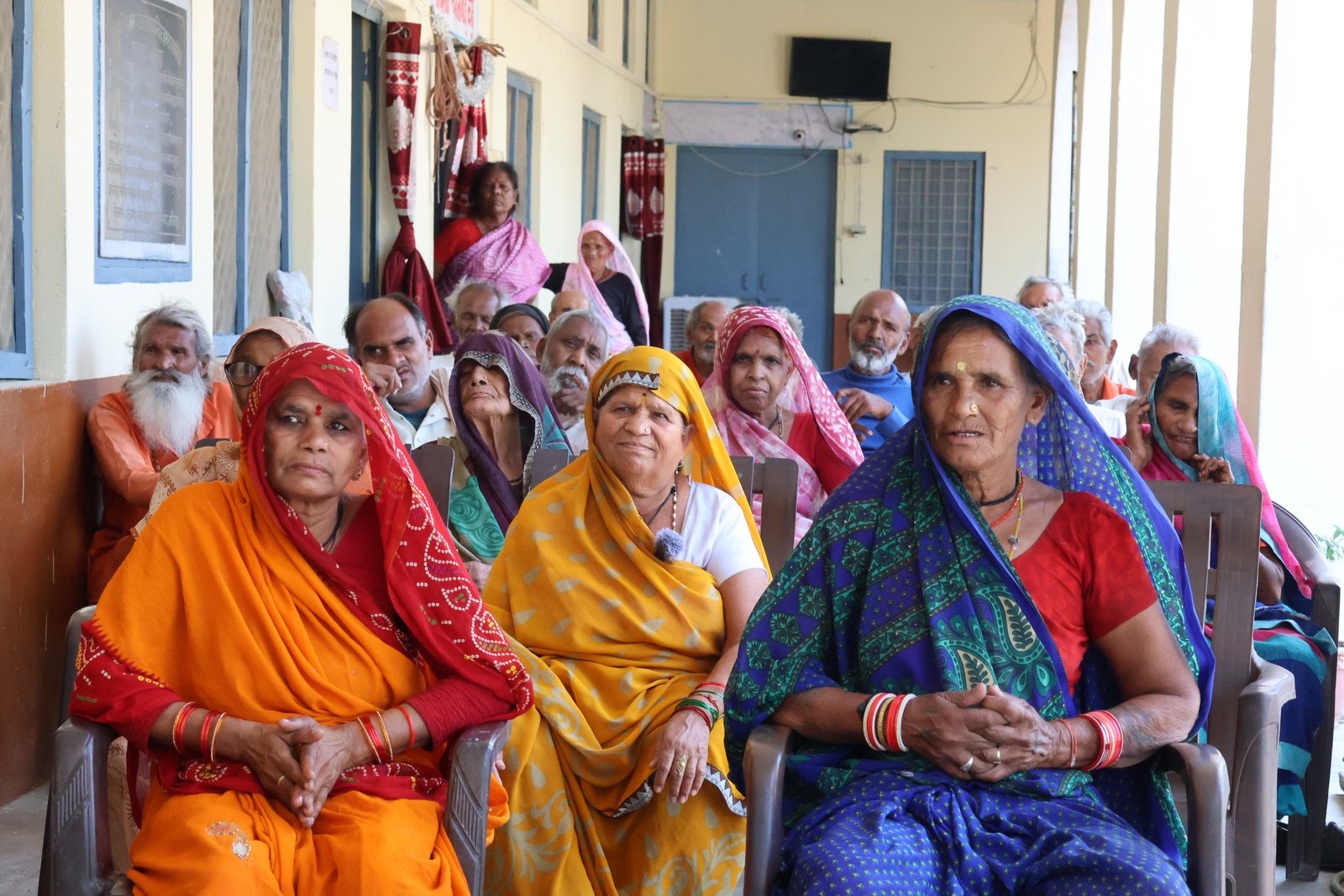
Older people want to feel useful. Light gardening, craft work, reading groups, and small livelihood activities give daily routines some shape. One example is DGVS, which operates three homes called “Apna Ghar” in Orai, Lalitpur, and Chitrakoot in Uttar Pradesh. Alongside accommodation, meals, clothing, and medical support, residents take part in activities such as gardening and agarbatti making, which nurture both activity and a small measure of financial independence.
Why One NGO Can Look After Elders and Run Other Programmes
It is common to find a single organisation handling elder care, child welfare, health, and livelihoods at once. Some people view this with suspicion, but it is legitimate as long as the organisation’s registered objectives cover each activity and its accounts are clear.
Where an Education NGO Fits
An Education NGO and an old age home may seem like unrelated causes, yet they share a root: people at the two ends of life are the least able to demand services for themselves. In practice, the two programmes also help each other. Schoolchildren who visit elders learn patience and respect, and elders who volunteer as storytellers or reading partners bring warmth to learning centres. Many adults who attend village literacy classes are, themselves, senior citizens.
Where Women Empowerment Fits
Women empowerment and elder care are even more closely tied. In most Indian households, women do the bulk of caregiving for older relatives, often without recognition or pay. Training women in nursing assistance, cooking, hygiene, and housekeeping can turn that unpaid labour into skilled employment inside care homes. Self help groups can also supply meals, stitched clothing, or handmade products, which means the same programme that supports residents also supports local women’s income.
When you evaluate an NGO, notice whether its different programmes actually connect in this way. Connected work usually signals a clear mission rather than scattered fundraising.
Seven Checks Before You Trust a Home
Do not rely on the name, a brochure, or a social media page alone. Try this checklist:
- Request the legal papers. A trust deed, society certificate, or company incorporation document should be shared without fuss.
- Verify tax certificates. Ask for 12A and 80G documents and cross-check them on government portals.
- Drop in unannounced. Observe the kitchen, bathrooms, sleeping quarters, and medical corner as they are on an ordinary day.
- Talk to residents alone. Ask what they eat, how staff speak to them, and whether they feel secure.
- Ask about night cover. Find out who is on duty after dark and how a medical emergency is handled.
- Look at the finances. Annual reports and audited statements show where money goes.
- Get costs in writing. Free, subsidised, and paying admissions should each be explained clearly, with receipts for every payment.
Treat it as a warning sign if a home blocks visits, avoids paperwork, or insists on large cash donations with no receipt.
Conclusion
So, does old age home come under NGO? Only when a registered non-profit is the one running it. An old age home may be state-run, charity-run, or commercially owned, and each model carries different promises and responsibilities. What matters most is not the label but the organisation behind the gate: its registration, its transparency, and the standard of Old Age Care residents receive every day.
If you are placing a loved one or planning a donation, visit in person, ask for documents, and listen to the residents. A genuine NGO will treat those questions as welcome, not as an insult.
Frequently Asked Questions
Does old age home come under NGO in India?
An old age home comes under an NGO only when a registered non-profit, such as a trust, society, or Section 8 company, runs it. Homes can also be operated by state governments or by private businesses that charge fees, and those are not NGOs.
Does an NGO need government approval to run an old age home?
An NGO needs valid legal registration first, and most states also expect additional approvals, such as registration with the social welfare department and local safety clearances. Government grants are optional, but compliance with state rules is not. Always confirm current requirements with your state authorities.
Can an Education NGO also run an old age home?
Yes, provided its registered objectives allow welfare and elder care, or are amended to include them. Many organisations run education, women empowerment, healthcare, and Old Age Care programmes together under a single registration.