Understanding the 5 Points of Women’s Empowerment: A Practical Guide to Global Progress
-
by
DGVS
- No Comments on Understanding the 5 Points of Women’s Empowerment: A Practical Guide to Global Progress
Gender equality and social progress rely heavily on one fundamental concept: giving women equal access, rights, and opportunities across all areas of life. If you have ever wondered about the core pillars driving this global movement, looking at the 5 Points of Women’s Empowerment provides a clear, structured framework. These five pillars—ranging from quality education to political participation—serve as the foundation for building equitable societies.
In this comprehensive guide, we will break down what these core principles mean, explore the main objectives behind female advocacy, and provide actionable takeaways to help drive meaningful change in everyday life.
What Is the Meaning of Women Empowerment?
Before diving into the specific pillars, it helps to understand the underlying meaning of women empowerment. Broadly defined, empowerment is the process of enabling women to gain control over their lives, make autonomous decisions, and overcome structural or cultural barriers.
When considering what is women of empowerment, it encompasses providing women with the resources, confidence, and legal protections needed to participate fully in economic, social, and political life. It is not about favoring one gender over another; rather, it is about creating a level playing field where everyone can thrive regardless of gender.
The 5 Points of Women’s Empowerment Explained
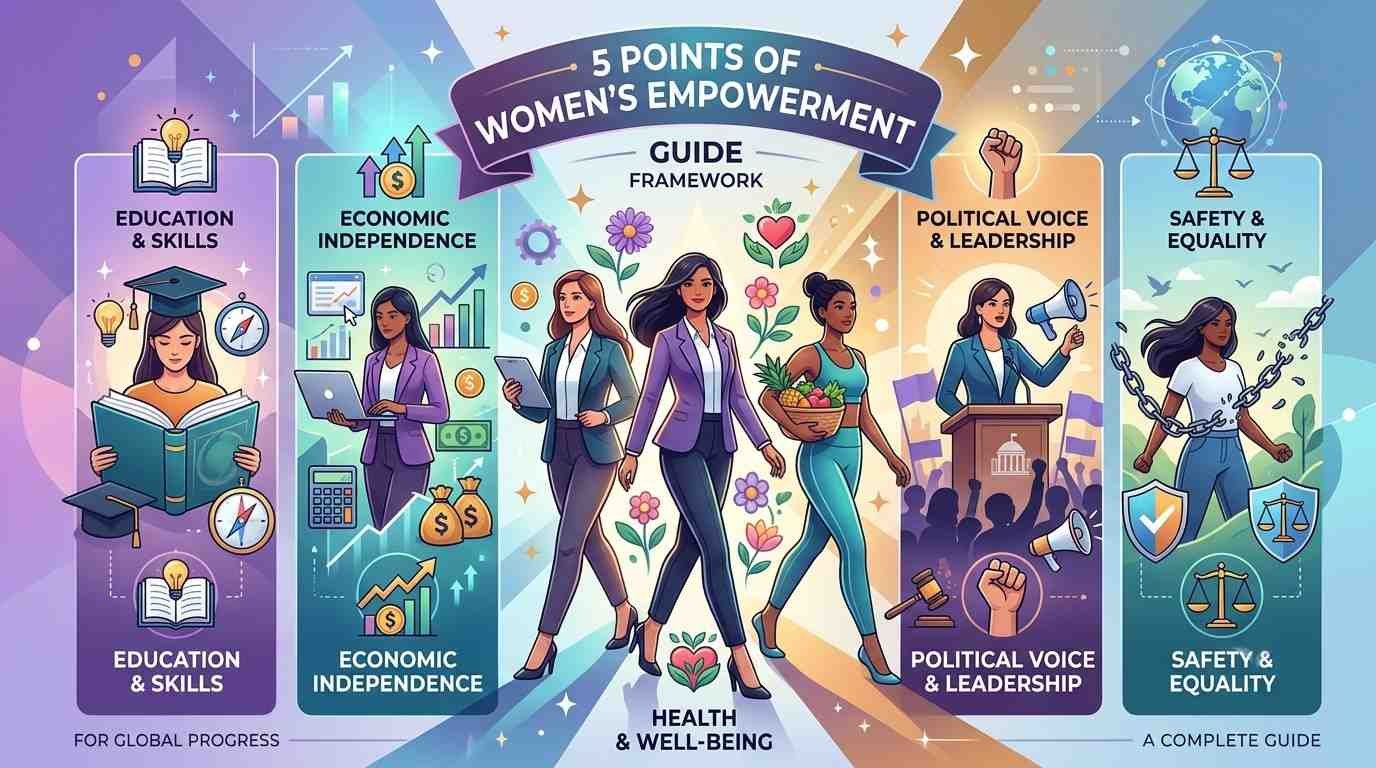
To create systemic change, policymakers, organizations, and community leaders focus on five essential areas. The 5 Points of Women’s Empowerment serve as a roadmap for personal, professional, and societal advancement:
                  ┌─────────────────────────────────────────┐
                  │    5 POINTS OF WOMEN'S EMPOWERMENT      │
                  └────────────────────┬────────────────────┘
                                       │
     ┌──────────────────┬──────────────┼──────────────┬──────────────────┐
     │                  │              │              │                  │
┌────▼─────┐     ┌──────▼───────┐ ┌────▼─────┐ ┌──────▼───────┐ ┌────────▼────────┐
│1. Quality│     │  2. Economic │ │3. Health &│ │ 4. Political │ │ 5. Safety &    │
│ Education│     │ Independence │ │ Well-being│ │  Leadership  │ │ Freedom from   │
└──────────┘     └──────────────┘ └───────────┘ └──────────────┘ │   Violence     │
                                                                 └────────────────┘
1. Quality Education and Skill Development
Education serves as the catalyst for all other forms of growth. Granting girls and women access to quality schooling, technical training, and digital literacy opens doors to higher-paying careers and lifelong autonomy.
-
Practical Example: Vocational programs that train women in coding, digital marketing, or skilled trades significantly raise their earning potential compared to informal labor markets.
2. Economic Independence and Financial Autonomy
Economic agency means women can earn, save, invest, and control their financial assets. When women gain financial stability, they gain the leverage needed to make independent choices regarding their households and careers.
-
Practical Example: Equal pay policies, microfinance initiatives, and fair access to venture capital empower female entrepreneurs to scale businesses and achieve self-reliance.
3. Health, Wellness, and Reproductive Autonomy
A foundational aspect of empowerment is control over one’s own body and health. Access to comprehensive healthcare, maternal care, and family planning resources allows women to make informed decisions about their well-being and future.
-
Practical Example: Workplace health programs offering paid parental leave and mental health support help women balance personal well-being with professional advancement.
4. Political Voice and Leadership Representation
Empowerment requires a seat at the decision-making table. When women serve in parliaments, corporate boards, and local councils, public policies and corporate governance naturally reflect more inclusive perspectives.
-
Practical Example: Mentorship pipelines that guide emerging female leaders into executive roles or local government positions ensure diverse representation.
5. Safety, Justice, and Freedom from Violence
No individual can feel truly empowered without physical security. Eradicating gender-based violence, domestic abuse, and workplace harassment is essential for fostering self-determination and peace of mind.
-
Practical Example: Enforcing strict workplace harassment policies and providing accessible legal aid services ensure safer environments for women.
What Are the Key Objectives of Women Empowerment?
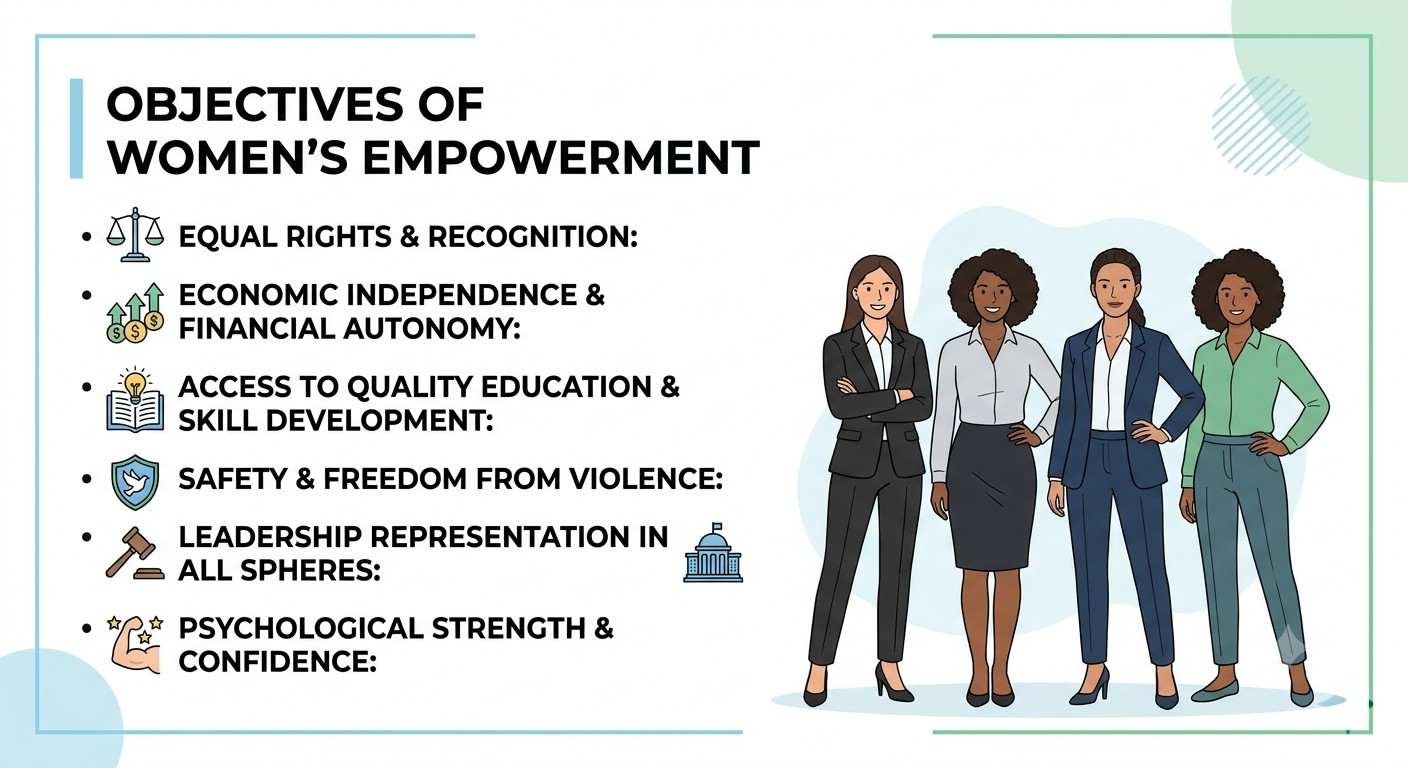
Understanding the primary objectives of women empowerment helps clarify why these five pillars are essential for sustainable global growth. Beyond individual benefit, empowering women leads to broad societal transformations:
| Objective | Description | Real-World Impact |
| Poverty Eradication | Boosting household income by enabling women to work. | Reinvesting up to 90% of female earnings back into family nutrition, healthcare, and education. |
| Economic Growth | Closing the gender employment gap. | Adding trillions of dollars to global GDP through labor workforce expansion. |
| Improved Child Health & Education | Educating mothers to improve family outcomes. | Lowering infant mortality rates and increasing school enrollment for future generations. |
| Enhanced Corporate Innovation | Building diverse teams in professional settings. | Driving creative problem-solving and stronger financial outcomes for organizations. |
How to Apply the 5 Points of Women’s Empowerment in Daily Life
Empowerment is not solely the responsibility of governments or international agencies. Individuals and organizations can actively champion these principles through concrete steps:
For Business Leaders & Managers
-
Audit Pay Equity: Regularly review compensation structures to eliminate gender pay disparities across similar roles.
-
Offer Flexible Working Conditions: Provide remote options and flexible hours to accommodate primary caregiving responsibilities.
-
Build Mentorship Networks: Connect promising female professionals with senior sponsors who can advocate for their promotions.
For Community Members & Individuals
-
Support Female-Owned Businesses: Consciously direct consumer spend toward female entrepreneurs and local creators.
-
Challenge Gender Biases: Speak up constructively when encountering casual stereotypes or unfair expectations in social settings.
-
Promote Educational Access: Volunteer or donate to non-profits focused on girls’ literacy and STEM education.
The Broader Impact: Why Every Pillar Matters
When all elements of the 5 Points of Women’s Empowerment operate together, communities experience compounding positive effects. For instance, an educated woman (Point 1) is better equipped to secure financial independence (Point 2), make informed healthcare choices (Point 3), step into community leadership (Point 4), and advocate for legal protections (Point 5).
Isolating just one area produces limited results; real progress requires a holistic approach that tackles social, economic, and political factors simultaneously.
Conclusion: Driving Future Growth Through the 5 Points of Women’s Empowerment
Advancing gender equality is an ongoing effort that requires commitment from every level of society. By focusing on the 5 Points of Women’s Empowerment—education, economic autonomy, health, leadership, and safety—individuals, corporations, and governments can create lasting change.
Understanding these core pillars allows us to remove structural barriers, support female leadership, and ensure every woman has the agency to determine her own path forward.
Frequently Asked Questions (FAQ)
What are the 5 points of women’s empowerment?
The 5 points of women’s empowerment are quality education, economic independence, health and reproductive autonomy, political voice/leadership, and safety from gender-based violence.
Why are the objectives of women empowerment important for the economy?
Empowering women economically expands the labor force, increases household income, drives consumer spending, and significantly boosts national GDP while reducing systemic poverty.
How can small businesses implement these empowerment principles?
Small businesses can implement empowerment principles by offering fair compensation, providing flexible work hours, establishing zero-tolerance harassment policies, and mentoring female employees for leadership roles.